
Object storage is designed for durable storage and retrieval of large amounts of unstructured content, but it is not an infinite cloud drive that manages itself. Images, video, downloads, logs, and backups may all be objects, yet their access patterns, retention, recovery time, and governance needs are different.
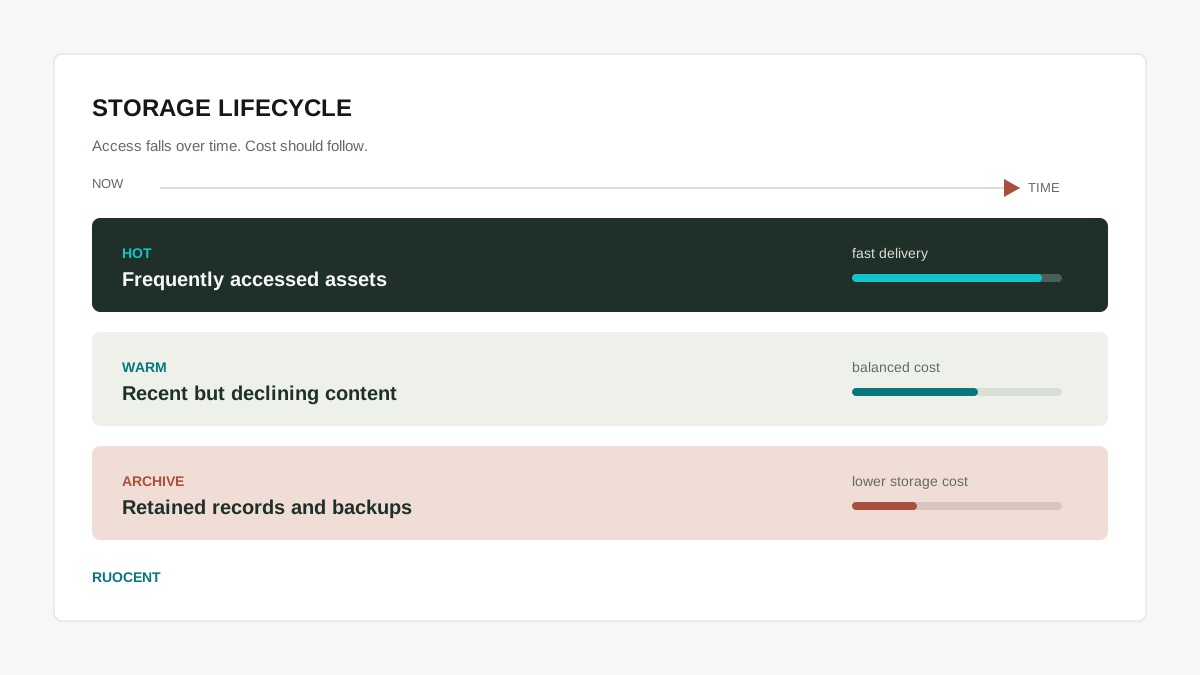
Keeping everything in one class creates permanent cost. Moving active data into archive too early creates slow recovery and retrieval charges. Lifecycle design aligns storage class with changing content value and access frequency.
Object storage and file systems behave differently
File systems emphasize directories, mounts, locking, and random modification. Object storage usually reads and writes whole objects through an API, with a key, metadata, and access policy. Applications should not assume local-disk semantics such as frequent in-place edits or file locking.
It works best for immutable or infrequently modified content: product media, attachments, source video, build artifacts, log archives, and backups. Define key naming, metadata, content type, cache headers, permissions, versioning, and lifecycle before filling a bucket.
Age alone is not enough for tiering
- Access frequency: recent requests, downloads, and whether pages still reference the object.
- Recovery time: whether the business can wait seconds, minutes, or hours.
- Rebuildability: whether another source can recreate the object.
- Retention: contractual, audit, archival, or internal governance requirements.
| Tier | Typical content | Priority | Poor fit |
|---|---|---|---|
| Hot | Live images, popular video, current downloads | Reliable reads, low latency, cache hits | Old copies nobody accesses |
| Warm | Past campaigns, previous versions, infrequent downloads | Preserve access with lower standing cost | Immediate high-volume reads |
| Cold | Audit archives, long-term backups, raw sources | Integrity, retention, authorized recovery | The only active working copy |
Hot data needs controlled delivery, not endless duplication
Hot data typically uses a standard class and CDN delivery. Cache keys, freshness, immutable naming, and purge behavior matter more than the lowest storage price. If a URL stays constant while the content changes, edges may retain stale material; if every release purges everything, hit rate collapses.
Use versioned or content-hashed filenames for immutable assets, shorter cache rules for indexes, and signed access for private material instead of exposing an entire bucket.
Warm transitions must preserve business meaning
Warm content is not “almost deleted.” It still carries value at a lower access rate. Before transition, identify which pages reference it, whether applications support a different storage class, and whether retrieval delay changes the user experience.
Cold data must answer how retrieval works
Low archive price usually comes with slower retrieval, minimum duration, or restore charges. Define the recovery time objective, approval process, temporary restore duration, and expected transfer cost. Cold storage should never be the only working copy of an active service.
Keep a manifest with object checksums, source, retention end date, and owner. Periodic sample retrieval proves that archived files are not merely listed but actually recoverable.
Versioning, replication, and backup are not the same
| Mechanism | Primarily solves | Does not solve alone |
|---|---|---|
| Versioning | Overwrite mistakes and short rollback | Full account compromise or bad lifecycle rules |
| Cross-region replication | Regional failure and nearby reads | Logical corruption and replicated deletion |
| Independent backup | Isolated recovery and long retention | Real-time low-latency delivery |
Measure the whole cost path
The bill may include capacity, write and read requests, retrieval, cross-region transfer, internet egress, lifecycle operations, and restore charges. A small image library with enormous request volume behaves differently from a huge archive that is rarely read.
Review capacity growth, object count, requests, internet and origin traffic, tier ratios, and deletion volume every month. Align anomalies with releases, live events, and migrations so they become operational signals instead of unexplained cloud spend.
Implementation checklist
- Inventory content types, sources, access paths, and owners.
- Define frequency, recovery time, and retention for each type.
- Separate rebuildable outputs, unique sources, active copies, and regulated archives.
- Test transition, retrieval, restore, and deletion on a limited prefix or bucket.
- Apply stricter permissions and audit logs to lifecycle changes and bulk deletion.
- Establish monthly capacity and traffic reporting with anomaly alerts.
Mature object storage does not keep every file in the fastest tier forever. It maintains availability while content is valuable, lowers cost as access declines, and preserves a known, authorized route for recovery.